
Home networking trends 2026 will reshape how households connect, stream, and secure their digital lives. Faster speeds, smarter management, and tighter security are driving this shift. Consumers now expect seamless connectivity across dozens of devices, and manufacturers are responding with significant upgrades.
This year marks a turning point. Wi-Fi 7 is moving from early adopter territory into everyday homes. AI is taking over network optimization. And the smart home ecosystem is finally getting the unified standard it has needed for years. Here’s what homeowners, tech enthusiasts, and IT professionals should watch for in 2026.
Key Takeaways
- Wi-Fi 7 is going mainstream in 2026, offering speeds up to 46 Gbps and improved reliability through Multi-Link Operation technology.
- AI-powered network management now automatically optimizes bandwidth, troubleshoots issues, and detects security threats without user intervention.
- The Matter protocol is finally unifying smart home devices, allowing products from different brands to work together seamlessly.
- Home networking trends 2026 emphasize stronger security with WPA3 encryption, network segmentation, and automatic firmware updates as standard features.
- Mesh networking systems with Wi-Fi 7 support now deliver whole-home coverage at more affordable price points, with entry-level kits starting around $150-200.
- For optimal performance, pair your new Wi-Fi 7 router with a compatible modem and gigabit-plus internet plan to avoid ISP bottlenecks.
Wi-Fi 7 Adoption Goes Mainstream
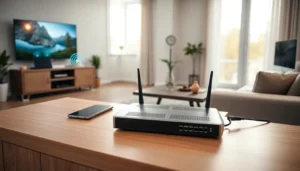
Wi-Fi 7 (802.11be) is the headline story for home networking trends 2026. After a slow rollout in 2024 and 2025, this standard is finally hitting mass-market routers and devices at accessible price points.
Wi-Fi 7 delivers theoretical speeds up to 46 Gbps, roughly four times faster than Wi-Fi 6E. But raw speed isn’t the only benefit. The protocol introduces Multi-Link Operation (MLO), which allows devices to transmit data across multiple frequency bands simultaneously. This reduces latency and improves reliability, especially in crowded homes with many connected gadgets.
For average consumers, Wi-Fi 7 means smoother 4K and 8K streaming, faster file transfers, and better performance for cloud gaming. Households running multiple video calls at once will notice fewer dropped connections and buffering issues.
Major router manufacturers including TP-Link, Netgear, and ASUS have released consumer-grade Wi-Fi 7 routers priced under $300. Smartphone makers like Apple, Samsung, and Google have also integrated Wi-Fi 7 chips into their latest flagship models. This hardware availability is pushing home networking trends 2026 toward widespread Wi-Fi 7 adoption.
One practical consideration: Wi-Fi 7 works best with a compatible modem and an internet plan that can actually deliver gigabit-plus speeds. Upgrading the router alone won’t unlock the full potential if the ISP connection is the bottleneck.
The Rise of AI-Powered Network Management
Artificial intelligence is changing how home networks operate. In 2026, AI-powered network management has become a standard feature in mid-range and premium routers.
These systems analyze traffic patterns in real time. They automatically prioritize bandwidth for video calls, gaming sessions, or large downloads based on usage. Some routers learn household routines and pre-allocate resources during peak hours.
AI also handles troubleshooting. When a device struggles to connect, the router can diagnose the issue and suggest fixes through a companion app. Some systems even resolve problems automatically, switching channels, adjusting power levels, or rebooting specific components without user intervention.
This shift matters because modern homes often run 20 to 50 connected devices. Smart TVs, thermostats, security cameras, gaming consoles, laptops, and phones all compete for bandwidth. Manual configuration is impractical for most users. AI removes that burden.
Home networking trends 2026 show AI extending into security monitoring as well. Routers can now detect unusual traffic patterns that might indicate a compromised device or attempted intrusion. They flag these anomalies and can quarantine suspicious devices automatically.
The downside? Privacy-conscious users may hesitate to let their router collect detailed usage data. Most manufacturers offer options to limit data collection, but reading the fine print is worth the effort.
Expanded Smart Home Integration and Matter Protocol Growth
The Matter protocol is gaining serious traction in 2026. This open standard allows smart home devices from different manufacturers to work together without proprietary hubs or complicated setup processes.
Matter launched in late 2022, but adoption was slow initially. Now, three years later, most major brands, including Apple, Google, Amazon, Samsung, and dozens of smaller manufacturers, sell Matter-compatible products. This compatibility is reshaping home networking trends 2026 by simplifying how smart homes connect.
Here’s why Matter matters: A user can buy a smart lock from one brand, a thermostat from another, and a lighting system from a third. All three devices communicate through Matter over the home network. Setup takes minutes instead of hours.
Matter runs over Thread, a low-power mesh networking protocol, or over Wi-Fi. Thread is particularly useful for battery-powered devices like sensors and smart locks because it consumes less energy than traditional Wi-Fi.
For home networking, this means routers and mesh systems increasingly include Thread border router functionality. Devices communicate locally rather than routing everything through cloud servers. The result is faster response times and better reliability even when internet service goes down.
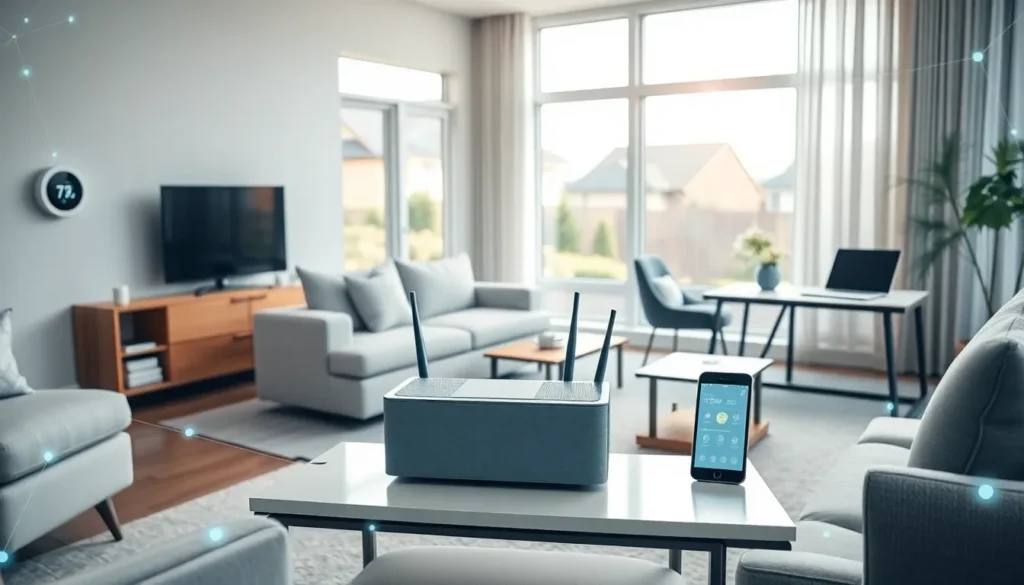
Home networking trends 2026 point toward unified ecosystems where the router serves as the central hub for all smart devices. This consolidation reduces complexity and improves the overall user experience.
Enhanced Security Features for Connected Homes
Security remains a top priority as homes add more connected devices. Home networking trends 2026 reflect this concern with several new protective features.
WPA3 encryption is now standard on all new routers. This protocol offers stronger protection than WPA2, making it harder for attackers to crack network passwords. Some routers also support 192-bit encryption for enterprise-level security.
Network segmentation has become more accessible. Users can create separate virtual networks for IoT devices, keeping smart cameras and thermostats isolated from computers and phones. If a cheap smart plug gets compromised, it can’t easily reach more sensitive devices.
Automatic firmware updates are increasingly common. Routers download and install security patches without user action. This addresses a longstanding problem, many home routers ran outdated firmware for years because users never logged into the admin panel.
Parental controls have also improved. Parents can set device-specific schedules, block categories of content, and receive alerts about online activity. These controls work at the network level, applying to all connected devices rather than requiring installation on each one.
Home networking trends 2026 also show growing interest in DNS-level protection. Services like Cloudflare, Quad9, and NextDNS block known malicious domains before they load. Many routers now integrate these services directly into their settings.
Mesh Networks and Whole-Home Coverage Solutions
Mesh networking systems continue to dominate the market for whole-home coverage. In 2026, these systems have become smarter, faster, and more affordable.
A mesh network uses multiple access points (called nodes or satellites) spread throughout a home. Devices connect to the nearest node, and the system handles handoffs seamlessly as users move around. Dead zones become rare.
Home networking trends 2026 show mesh systems incorporating Wi-Fi 7 across their product lines. Premium systems from Eero, Google Nest, Orbi, and Linksys now offer tri-band or quad-band configurations with dedicated backhaul channels. This means the nodes communicate with each other on a separate band, leaving more bandwidth available for connected devices.
Pricing has dropped significantly. Entry-level mesh kits covering homes up to 3,000 square feet now cost around $150-200. Premium systems with advanced features run $400-600 for comparable coverage.
Installation has become nearly foolproof. Companion apps guide users through placement, automatically test signal strength, and suggest optimal node locations. Most systems are operational within 15 minutes.
Wired backhaul remains the best option for maximum performance. Homes with Ethernet already run to multiple rooms can connect mesh nodes via cable instead of wireless backhaul. This frees up wireless capacity entirely for client devices.
For larger homes or properties with challenging layouts, outdoor mesh nodes have also become more common. These weatherproof units extend coverage to garages, backyards, and detached buildings.